
News
Why APAC Is the Next Data Privacy Frontier for Life Sciences

APAC as a Growing Hub for Clinical Development
In recent years, the Asia-Pacific region (APAC) has emerged as the fastest-growing market for Clinical Trials globally. The Life Sciences market is projected to grow from USD 18.8B in 2025 to USD 41.3B by 2035¹.
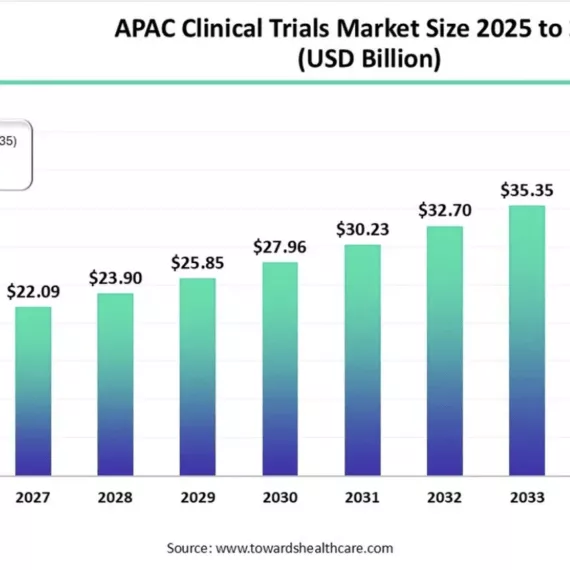
This sustained growth, which began gaining momentum over the past decade, has led APAC to account for approximately 58% of global Phase I Clinical Trials², positioning the region not as an emerging market, but as a central hub for global clinical development.
📈 Key Drivers Behind the Expansion of Life Sciences in APAC
This growth is driven by a unique combination of structural advantages: greater cost efficiency compared to traditional markets, continuous investment in research and development, access to large and diverse patient populations, and regulatory environments that enable faster patient recruitment³⁴.
From a Life Sciences perspective, APAC combines scale, speed, and cost efficiency in a way no other region currently does.
🧩 A Fragmented and Multi-Layered Data Protection Environment
However, this rapid growth has not been matched by regulatory harmonization in Data Protection. While the clinical landscape shows some degree of alignment, the Data Privacy environment in APAC remains significantly more complex. The region is characterized by a fragmented regulatory framework in which each jurisdiction has developed its own approach to Data Protection⁵⁶.
On one end of the spectrum, jurisdictions such as China and Vietnam have adopted strict frameworks, including data localization requirements, security assessments, and tight controls over cross-border data transfers⁶. At the same time, countries like Japan, South Korea, and Thailand have implemented frameworks more closely aligned with international standards⁶. Meanwhile, jurisdictions such as Singapore, Malaysia, and Hong Kong have pursued more flexible, business-oriented approaches⁶ prioritizing cross-border interoperability to attract multinational sponsors.
India, on the other hand, stands out as a key emerging jurisdiction. With the enactment of its Digital Personal Data Protection Act in 2023, and the newly operational Data Protection Board (2026) the country is transitioning toward a more structured regulatory framework, while still maintaining a degree of flexibility in areas such as cross-border data transfers.
This regulatory mosaic means that compliance in APAC cannot be tackled through a uniform strategy, but instead requires a country-by-country analysis.
🎯 Core Challenges in Defining Lawful Processing and Accountability
APAC represents both the greatest opportunity and the greatest compliance challenge. Clinical Trials inherently require cross-border data transfers and coordination among multiple stakeholders⁷. However, these activities are increasingly subject to restrictive and divergent regulatory requirements, including data localization regimes in jurisdictions such as China and Vietnam⁸. In this context, the challenge is not limited only to data collection, but it extends to how data is transferred and managed across jurisdictions with differing and sometimes conflicting requirements.
To succeed, organizations must implement efficient cross-border data transfer mechanisms and ensure clear legal coordination among all stakeholders involved.
🔄 Controlling Data Flows in Restrictive and Divergent Regulatory Frameworks
In APAC, compliance challenges do not start with data transfers, but with defining who you are and on what legal grounds you process data. Before addressing cross-border transfers, organizations must navigate fundamental differences in legal basis and role qualifications. Unlike harmonized frameworks established by the European General Data Protection Regulation (GDPR), the regulatory environment in the APAC region is characterized by a fragmented landscape where jurisdictions follow distinct, and often divergent, Data Protection requirements⁹.
Determining the appropriate legal basis for processing and clearly defining stakeholder roles can become a significant challenge if approached with a rigid or centralized strategy. It is essential to properly structure data transfers, conduct risk assessments, allocate responsibilities clearly, and comply with the specific obligations of each jurisdiction.
⚖️ Balancing Opportunity and Compliance in a Complex Regulatory Landscape
Navigating this landscape requires more than legal knowledge; it requires an operational understanding of how data flows in Clinical Research and the ability to implement multi-jurisdictional strategies that align legal requirements with business realities¹⁰.
Unlocking the potential of APAC requires not only recognizing its growth, but also having the expertise to navigate its regulatory complexity effectively.
At MyData-TRUST, we support organizations in designing compliant and scalable Data Protection frameworks tailored to multi-jurisdictional Clinical Trials. By combining legal expertise with in-depth knowledge of the Life Sciences ecosystem, we help organizations translate regulatory complexity into practical, risk-based strategies that enable compliant data use without hindering innovation or study timelines.
Author: Jaime Omar Armendariz Loureiro and Marisa-Adela Pienar
¹Towards Healthcare. (2024). APAC clinical trials market size report.
²Life Sciences Review. (2023). APAC accounts for increased phase I clinical trials
³Clinical Leader. (2023). What factors are driving the growth of clinical trials in the APAC region.
⁴Grand View Research. (2024). Asia Pacific clinical trials market outlook
⁵CSO Online. (2023). The state of privacy regulations across Asia.
⁶Meritas. (2023). Asia data protection guide 2023
⁷PharmaFocus Asia. (2023). Future of clinical trials in APAC.
⁸Forrester. (2022). GDPR isn’t enough: Navigating privacy regulations in APAC.
⁹DLA Piper. (2024). Data protection laws of the world: Asia Pacific overview
¹⁰Future of Privacy Forum. (2024). Regulatory strategies in Asia-Pacific data protection.
Running trials across APAC means a country-by-country analysis before a single data transfer leaves the region. MyData-TRUST acts as DPO for clinical trials and Life Sciences and supports sponsors on regimes such as the Chinese PIPL.